
Air conditioning cleaning in London may help when an AC unit releases a musty smell as soon as it starts. Instead of fresh, cool air, the room may fill with an unpleasant odour that resembles damp clothes or a poorly ventilated cupboard.
This smell can occur when moisture and dust collect inside the air conditioning system. Over time, these conditions may encourage microbial growth on internal surfaces. However, a musty smell does not always mean that mould is present — blocked drainage, dirty filters and other sources of moisture may also contribute.
Why Does an Air Conditioner Smell Musty When Switched On?
Air conditioners move indoor air across a cooling coil. During cooling, moisture from the air condenses on the coil and flows into a drainage tray. This moisture should leave through the condensate drainage system.
However, dust and other particles can collect on internal components. When moisture remains in these areas, unpleasant smells may develop. The odour can become more noticeable when the fan first starts and pushes air through the unit. Possible causes include:
- Dirty air filters
- Dust on the evaporator coil
- Moisture remaining in the drain tray
- Blocked condensate drainage
- Microbial growth on internal surfaces
- Odours entering from the surrounding room
A professional assessment can help identify the source rather than simply masking the smell.
Can Mould Grow Inside an Air Conditioning Unit?
Mould in an air conditioning indoor unit is possible when suitable moisture and organic material are present. Cooling coils and condensate trays can become damp during normal use. If dust and debris build up, these areas may provide conditions that allow mould to develop.
However, not every dark mark or unpleasant smell indicates mould. Some deposits may be ordinary dirt or other forms of contamination. A visual inspection can help identify areas requiring attention, although determining the exact type of growth may require specialist testing.
Visible contamination should be dealt with carefully. Homeowners should avoid disturbing suspected mould inside the unit or spraying unsuitable chemicals into the airflow. A trained technician can assess which cleaning methods are appropriate.
Why Is the Smell Worse When the AC First Starts?
A musty smell when an air conditioner starts may be particularly noticeable during the first few minutes of operation. While the unit is switched off, moisture or odorous deposits may remain inside the casing. When the fan begins moving air, these smells may be carried into the room.
The odour may become less noticeable as airflow continues. However, this does not mean the underlying problem has disappeared. Some people notice the issue after leaving the air conditioner unused for several weeks — periods of inactivity can make existing odours more noticeable when the system is restarted.
Can Air Conditioning Cleaning in London Remove Musty Smells?
Air conditioning cleaning in London may reduce or remove odours caused by dirt and contamination inside the system. Professional cleaning can address areas that are difficult to reach during ordinary household maintenance. Depending on the unit's design and condition, the service may include:
- Inspecting internal components
- Cleaning or replacing air filters
- Cleaning the evaporator coil
- Checking the condensate tray
- Flushing suitable drainage lines
- Removing accessible contamination
- Inspecting airflow and performance
The technician should use cleaning products suitable for the equipment. However, cleaning cannot guarantee that every odour will disappear permanently. If the smell comes from a separate plumbing, drainage or building problem, further investigation may be necessary.
Can Dirty Filters Make an Air Conditioner Smell?
Yes. Air filters collect dust and other airborne particles as air passes through the system. Over time, dirty filters can restrict airflow. They may also contribute to unpleasant odours, particularly when moisture is present.
Some air conditioning systems use washable filters. Others require replacement filters. Homeowners should follow the manufacturer's instructions rather than assuming every filter can be washed. Using unsuitable cleaning products or reinstalling a wet filter may create additional problems. A technician can check whether the filter is the main source of the smell or whether deeper cleaning is needed.
Why Does a Blocked Condensate Drain Cause Bad Smells?
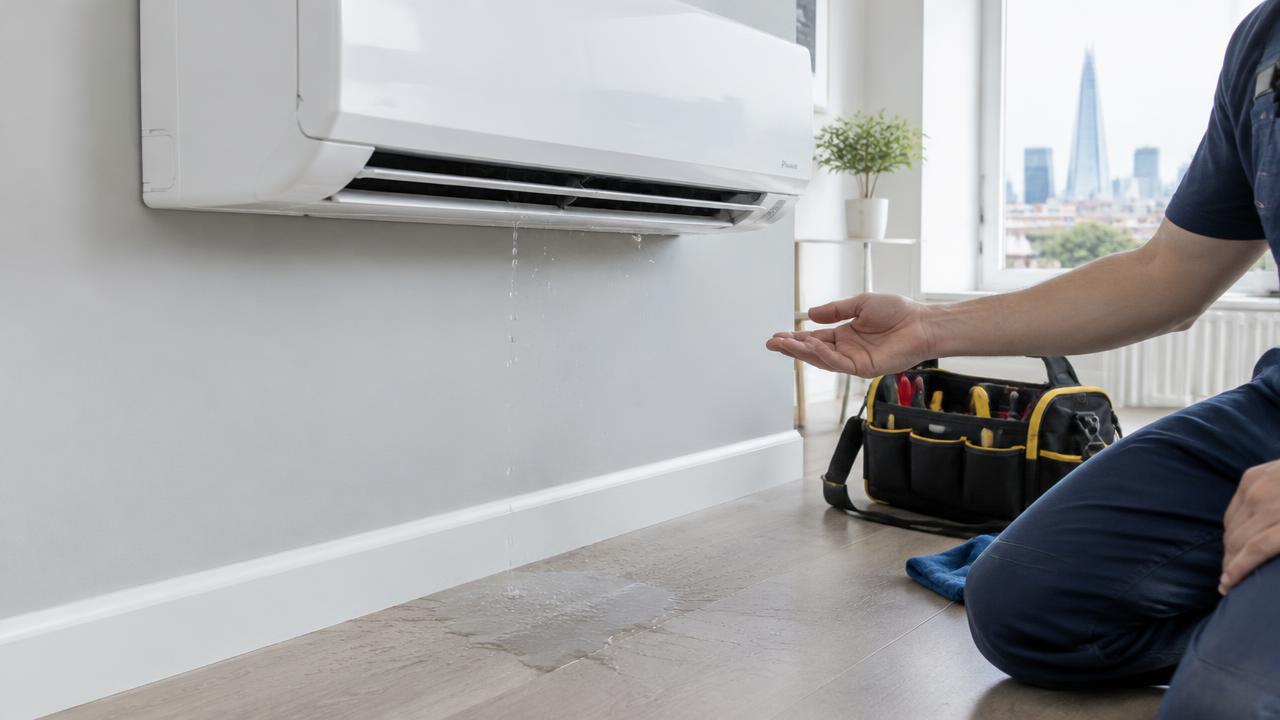
The condensate drain removes moisture collected during cooling. If the drain becomes blocked, water may remain inside the tray or pipework. Standing water combined with dirt can contribute to unpleasant odours. In some cases, a blocked drain may also cause water to overflow from the indoor unit. Possible warning signs include:
- Musty smells during cooling
- Water collecting inside the unit
- Dripping from the indoor casing
- Unusual noises from a condensate pump
- Visible dirt in accessible drainage areas
However, odours may also arise from an incorrectly configured drainage connection. A technician can inspect the route and determine whether cleaning or repair is required. Simply adding fragrance to the unit will not resolve a blocked drain.
What Is Included in Professional Air Conditioning Cleaning in London?
Professional air conditioning cleaning in London involves more than wiping the outside casing. A technician should assess the condition of the equipment and identify areas where dust or contamination has accumulated. The cleaning process may include several stages.
Initial Inspection
The technician checks the unit's condition and asks about odours, airflow and cooling performance.
Filter Care
Reusable filters may be cleaned, while unsuitable or damaged filters may need replacing.
Coil Cleaning
The evaporator coil may be cleaned using methods and products suitable for the equipment.
Drainage Cleaning
The condensate tray and drainage line may be inspected and cleaned.
Internal Cleaning
Accessible internal surfaces can be treated where appropriate.
Performance Checks
The technician checks whether the unit operates correctly following the service.
The exact work depends on the model, level of contamination and safe access.
Can You Spray Air Freshener Inside an AC Unit?
Spraying perfume, household disinfectant or air freshener directly into an air conditioning unit is not recommended. These products may not be suitable for internal components. Some sprays can leave residues on coils, filters or other surfaces. Others may damage materials or create irritating fumes when circulated through the room.
Fragrance can also hide an odour without addressing the underlying cause. If the smell comes from standing water or contamination, it is important to investigate that source. Homeowners should use only cleaning methods and products specifically approved for their equipment. Deep internal cleaning is best handled by a suitably trained technician.
Can a Musty AC Smell Affect Indoor Air Quality?
An air conditioner circulates air through an indoor space. Dust and contamination within the system may affect the quality of the air moving through it. However, an unpleasant smell alone cannot determine whether indoor air is unsafe. The effect depends on the type and amount of contamination, ventilation and other factors.
People with asthma, allergies or other respiratory sensitivities may be more affected by certain indoor contaminants. If anyone experiences persistent symptoms associated with using the system, switching it off and arranging an assessment may be sensible. Medical concerns should be discussed with a healthcare professional. Cleaning the equipment may help address a source of contamination, but it does not replace adequate ventilation or wider indoor air quality management.
Can Poor Ventilation Make AC Odours Worse?
Poor ventilation may allow indoor smells and moisture to build up. Many wall-mounted split air conditioners mainly recirculate the air already inside a room — they do not necessarily bring in fresh outdoor air. This means odours from damp materials, furnishings or other indoor sources may continue circulating.
An AC unit may therefore appear to be the source of a smell when the problem is elsewhere. For example, a damp wall or nearby drainage issue may produce an odour that becomes more noticeable when the fan operates. If cleaning the unit does not resolve the issue, the wider room environment may need investigation.
How Often Should Air Conditioning Filters Be Cleaned?
Filter maintenance depends on the equipment, operating conditions and manufacturer's recommendations. A unit used daily in a dusty environment may need more attention than one used occasionally in a clean room. Some manufacturers recommend frequent checks during periods of regular operation. However, cleaning intervals vary — homeowners should consult the user manual for their model.
When cleaning accessible filters:
- Switch off the appliance as instructed.
- Remove only parts intended for user maintenance.
- Follow the approved cleaning method.
- Allow washable filters to dry as directed.
- Refit them correctly before operating the unit.
Never reach into electrical compartments or dismantle refrigerant components. If the filter is damaged or heavily contaminated, ask whether replacement is more appropriate.
How Can You Prevent Musty AC Smells Returning?
Regular maintenance can reduce the conditions that contribute to unpleasant odours. Useful steps include:
- Cleaning accessible filters as recommended
- Arranging professional servicing
- Keeping condensate drains clear
- Reporting water leaks promptly
- Ensuring the unit has suitable airflow
- Following manufacturer operating guidance
- Managing excessive indoor humidity
- Investigating damp or mould elsewhere in the property
Some air conditioners have a fan-drying or coil-drying function designed to reduce residual moisture. Where provided, this should be used according to the manufacturer's instructions. However, no routine can guarantee that mould or odours will never develop. Repeated smells may indicate a fault that requires further investigation.
When Should You Book Air Conditioning Cleaning in London?
Air conditioning cleaning in London may be appropriate when musty smells return despite routine filter care. Professional attention is also sensible if the unit shows signs of contamination, restricted airflow or condensate problems. Consider arranging a visit if:
- The smell returns whenever the AC starts
- Cleaning the filter has not helped
- There is visible contamination inside the unit
- Water remains in the condensate tray
- Cooling performance has declined
- The unit has not received professional maintenance for a long time
- An unpleasant odour is accompanied by water leakage
A burning or electrical smell is different from an ordinary musty odour. If the unit produces a burning smell, smoke or signs of electrical overheating, switch it off if safe and seek urgent professional assistance.
Final Thoughts
A musty smell from an air conditioner may result from dust, moisture, contamination or a drainage problem. Although cleaning an accessible filter can help in some cases, deeper odours may require professional attention. Air conditioning cleaning in London can help identify and remove suitable sources of contamination while checking the condition of the coil, drain tray and filters.
Regular maintenance may also reduce the risk of recurring smells and poor airflow. For more information, explore our air conditioning cleaning services, return to the Ninja Air Conditioning homepage, or get in touch with our London team to book a professional clean today.