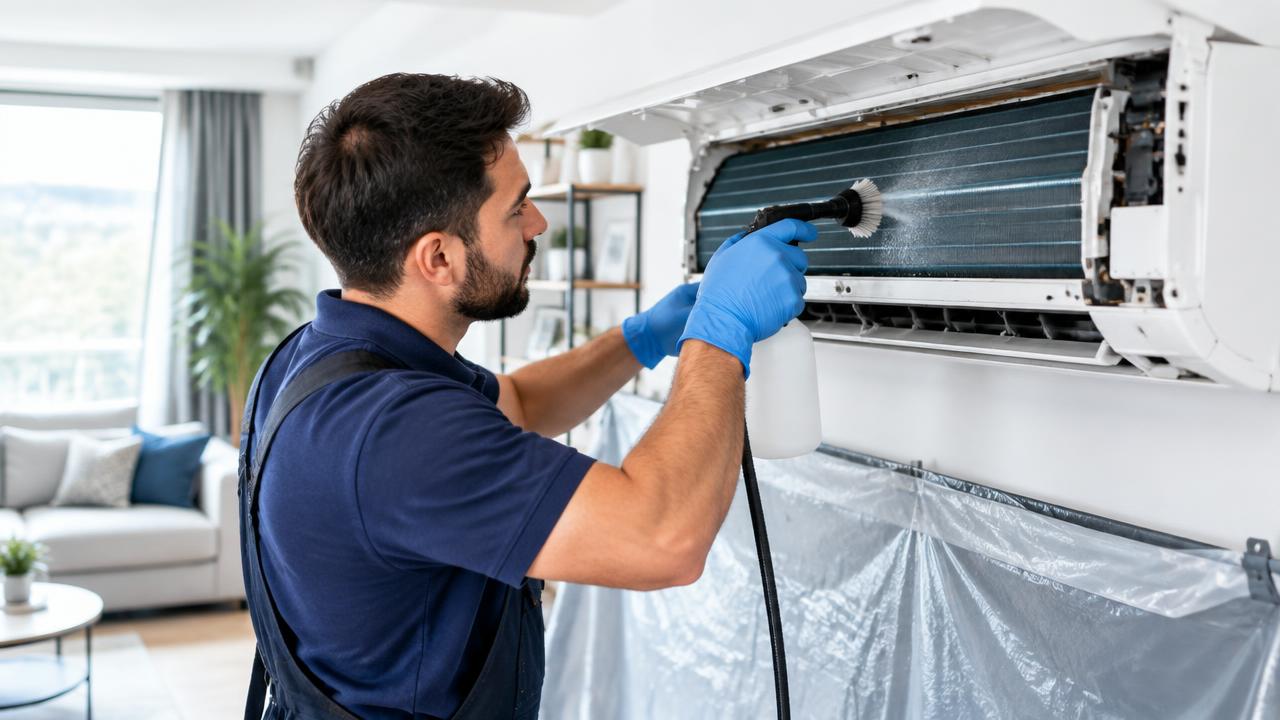
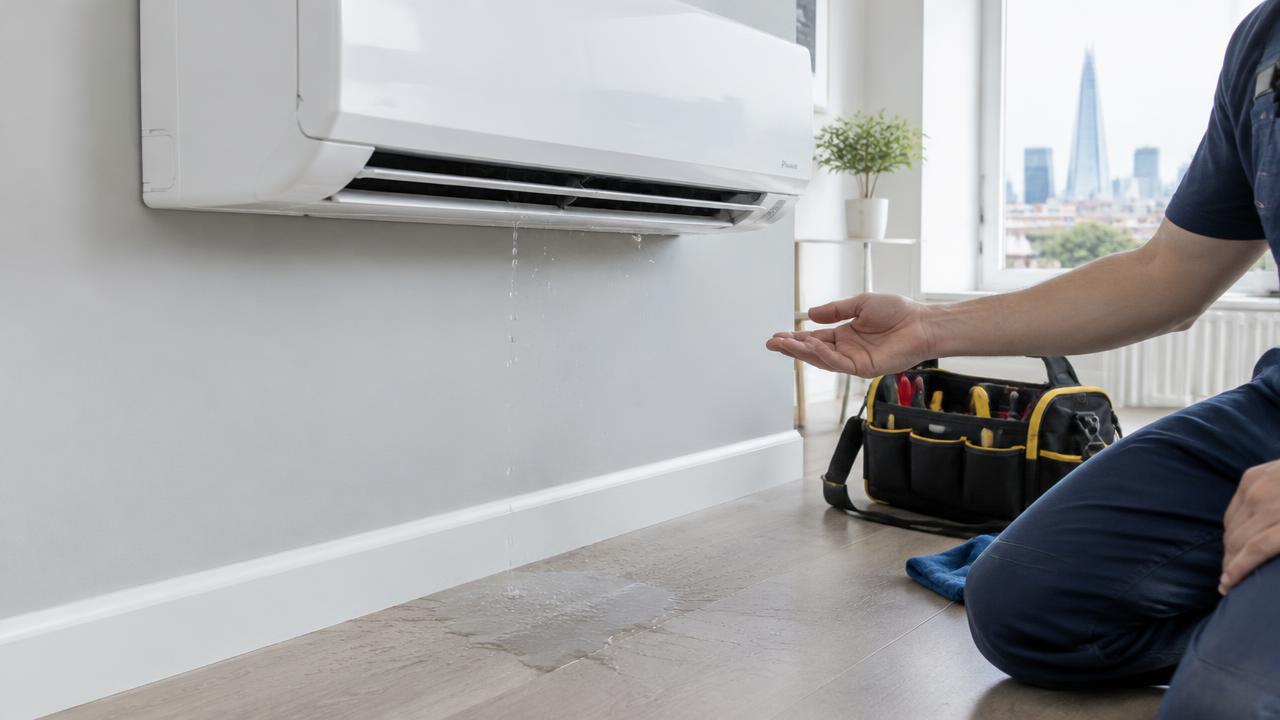
Air conditioning repair in London may be needed when an indoor AC unit starts dripping water onto the wall or floor. A small puddle beneath a wall-mounted unit can be worrying, especially when the system was working normally the day before. Air conditioners naturally produce condensation while cooling a room — however, this water should drain away through a suitable pipe or pump system rather than escape into the property.
A leaking unit may have a blocked drain, damaged tray or another fault affecting water removal. Understanding the possible causes can help homeowners respond safely and avoid further damage.
Why Does an Indoor Air Conditioner Produce Water?
Air conditioners remove heat from indoor air to keep rooms cool. As warm air passes over the cold evaporator coil, moisture in the air can turn into water droplets — this process is called condensation.
The droplets collect in a condensate tray before passing into a drainage system. Depending on the installation, water may leave through a gravity drain or a condensate pump. This is a normal part of cooling.
However, water should not run down the indoor casing, drip onto furniture or collect on the floor. If this happens, something may be preventing the condensation from draining properly.
What Causes an Indoor Air Conditioner to Leak Water?
An indoor air conditioner leaking water can have several possible causes. The most common problems involve drainage, airflow or components that collect condensation. Potential causes include:
- A blocked condensate pipe
- A damaged or incorrectly positioned drain tray
- A faulty condensate pump
- Restricted airflow through dirty filters
- Ice forming on the evaporator coil
- Incorrect drainage pipework
- An installation fault affecting the unit's position
Some leaks appear only after the air conditioner has been running for a long period. Others develop soon after the system starts. The timing can provide useful information, but it does not confirm the cause — a professional inspection is often needed to identify the fault.
Can a Blocked Condensate Drain Cause Water to Drip?
A blocked air conditioning condensate drain is one possible reason for indoor water leakage. Condensate drainage pipes are designed to carry moisture away from the indoor unit. Over time, dust, dirt and biological deposits may collect inside the system. If the drain becomes restricted, water can begin backing up — the condensate tray may then overflow, allowing water to escape from the unit.
Warning signs can include:
- Dripping from the lower edge of the unit
- Water marks beneath the indoor casing
- A damp smell near the air conditioner
- Intermittent leaks during cooling
- Water collecting around the installation
Some systems may shut down automatically when their condensate safety controls detect a problem. However, not every unit has the same protective features. A technician can inspect the drain and clear the obstruction using suitable equipment.
When Is Air Conditioning Repair in London Necessary?
Air conditioning repair in London is recommended when water is escaping from the indoor unit or surrounding pipework. A leak should be investigated rather than left until the next routine service. Professional attention is particularly important if:
- Water is running down a painted wall
- Moisture is reaching electrical fittings
- The unit repeatedly leaks after restarting
- Cooling performance has declined
- The condensate pump is making unusual noises
- Ice has formed on the indoor coil
- The drainage system appears damaged
A leaking air conditioner may continue cooling the room, but this does not mean it is safe to keep running. If water is escaping into the property, switch the system off using its normal controls if it is safe to do so. Do not touch wet electrical equipment.
Can Dirty Air Filters Cause AC Water Leaks?
Dirty filters can restrict airflow through an air conditioning system. When insufficient warm air passes over the evaporator coil, the coil may become unusually cold. In some conditions, moisture on the coil can freeze. As the ice later melts, water may overwhelm the drainage arrangement or escape from areas not designed to collect it.
However, ice formation can have several causes, including refrigerant or airflow faults — a dirty filter is not always responsible. Homeowners may be able to inspect and clean accessible filters according to the manufacturer's instructions. Before doing so, switch off the appliance and follow its safety guidance. Never dismantle electrical or refrigerant components. If icing or leaking continues, arrange a professional assessment.
What Happens if the Condensate Pump Fails?
Some air conditioning systems use a condensate pump to move water away when gravity drainage is not practical. These pumps are common in installations where the drainage route rises before reaching a suitable outlet. If the pump stops working, water may collect in the tray or reservoir. Possible causes include:
- A blocked pump inlet
- A failed motor
- A stuck float switch
- A damaged discharge tube
- An electrical or control fault
Some systems include an automatic shutdown feature to help prevent overflow. However, the protection depends on the installation. A technician can test the pump and determine whether cleaning, repair or replacement is necessary.
Why Does Water Leak Only After Several Hours?
A leak that develops after prolonged cooling may be related to gradual condensate accumulation. For example, a partly blocked drain may allow a small amount of water to pass through. However, if condensation forms faster than it can drain, the tray may eventually overflow.
Another possibility is ice forming on the evaporator coil. When the ice melts, the resulting water may exceed the drainage system's capacity. The problem may also be more noticeable on humid days because the unit removes more moisture from the air. These patterns are clues rather than definite diagnoses — a professional should check the system before deciding what repair is needed.
Can Air Conditioning Repair in London Prevent Water Damage?
Air conditioning repair in London can help address faults before further water damage develops. Even a relatively small leak may affect plaster, paint, flooring or nearby furniture if left untreated. Repeated moisture can also create conditions that encourage mould growth on affected materials.
The first priority is to stop the unwanted water discharge safely. The engineer can then investigate the underlying cause. Depending on the findings, the work may involve:
- Clearing the condensate drain
- Repairing damaged drainage connections
- Replacing a failed condensate pump
- Repairing or replacing the drain tray
- Correcting an installation problem
- Investigating frozen coils or restricted airflow
A proper diagnosis helps avoid replacing components unnecessarily.
What Should You Do Before an AC Engineer Arrives?
If the indoor unit starts leaking water, take simple precautions to protect the property. Recommended steps include:
- Switch off the air conditioner if it is safe.
- Keep people away from wet electrical equipment.
- Move valuable items away from the affected area.
- Place a suitable container beneath the drip if safe.
- Photograph the leak and any visible water damage.
- Contact a qualified air conditioning technician.
Does a Water Leak Mean the Air Conditioner Needs Replacing?
Not necessarily. Many condensate problems can be repaired without replacing the entire air conditioning system. For example, a blocked drain or failed condensate pump may require only a specific repair. However, replacement may be discussed if the equipment is severely damaged, unreliable or no longer economical to maintain. Factors include:
- Age of the unit
- Availability of replacement parts
- Overall system condition
- Previous breakdown history
- Likely repair costs
A technician should explain the available options before major work begins.
How Can Regular Maintenance Reduce AC Water Leaks?
Routine air conditioning servicing may help identify drainage problems before they cause visible leaks. Depending on the system, maintenance can include checking the condensate tray, drainage route, pump and filters. Keeping filters clean may also help maintain suitable airflow.
However, maintenance cannot guarantee that leaks will never happen. Pumps can fail, pipes can become blocked and components may deteriorate unexpectedly. Homeowners should follow the manufacturer's service recommendations and investigate any new symptoms promptly.
Final Thoughts
Water dripping from an indoor air conditioner usually means condensation is not being removed as intended. A blocked drain, faulty pump, damaged tray or airflow problem may be responsible. Air conditioning repair in London can help locate the cause and restore proper drainage before further property damage occurs.
If an AC unit is leaking, switch it off safely and arrange an inspection rather than allowing the problem to continue. For professional assistance, explore our air conditioning repair services, head back to the Ninja Air Conditioning homepage to see everything we offer, or get in touch with our London team to book a technician today.